
Storm Damage Prevention for Texas Commercial Roofs

Storm Damage Prevention for Texas Commercial Roofs
Texas weather is legendary for its raw intensity. From high-velocity hail storms sweeping through North Texas to severe wind uplift in West Texas and tropical cyclones battering the Gulf Coast, commercial properties in the Lone Star State face some of the most aggressive weather patterns in North America.
For commercial property managers, building owners, and facility engineers, a commercial roof is not merely a structural shelter—it is a critical business asset. A single compromised membrane or unaddressed leak can halt operations, destroy expensive inventory, damage interior infrastructure, and cost tens of thousands of dollars in emergency repairs and insurance disputes.
At Elite Construction Solutions, we specialize in engineering commercial roofing systems that stand up to Texas’s unpredictable environment. Prevention is always more cost-effective than disaster recovery. This guide outlines the major weather threats in Texas, proactive maintenance strategies, structural retrofits, and the emergency response protocols needed to safeguard your commercial roof year-round.
1. The Texas Threat Matrix: Understanding Severe Weather Risks
To effectively protect a commercial building, you must first understand the specific meteorological forces at play across Texas.
High-Velocity Hail (Hail Alley)
Texas routinely leads the nation in hail-related property insurance claims. Hailstones exceeding 2 inches in diameter strike single-ply membranes (TPO, PVC, EPDM) with immense kinetic energy.
- Impact Damage: Hail causes severe fractures, micro-punctures, and hidden matrix bruising.
- Granule Loss: On modified bitumen and built-up roofs (BUR), hail knocks off protective mineral granules, exposing asphalt layers to accelerated UV degradation.
- Metal Indentation: Metal panels and rooftop mechanical units suffer structural denting that can loosen fasteners and open lap seams.
Extreme Wind Uplift and Straight-Line Winds
High winds create negative pressure zones over low-slope commercial roofs. As wind sweeps over the edge of a building, it creates a vacuum effect (uplift pressure) concentrated along the roof perimeters, corners, and flashings.
- Peeling and Tear-Offs: If edge metal or coping caps fail, wind enters underneath the membrane, leading to sudden, wide-scale roof detachment.
- Fastener Back-Out: Constant micro-vibrations from sustained winds gradually loosen mechanical fasteners, creating entry points for water.
Tropical Storms, Hurricanes, and Torrential Rain
Commercial roofs in Central and Coastal Texas face atmospheric rivers and hurricane-force moisture. Standard drainage systems can easily become overwhelmed when several inches of rain fall per hour.
- Ponding Water: When water sits on a flat roof for longer than 48 hours, it adds structural weight (62.4 lbs per cubic foot), stresses seams, and accelerates chemical breakdown of single-ply membranes.
- Hydrostatic Pressure: Standing water forces its way through tiny pinholes or hairline cracks in flashings that would otherwise resist shedding rainfall.
Thermal Shock and UV Degradation
Texas summer heat pushes rooftop temperatures past 150°F. When a sudden afternoon thunderstorm drops cold rain on a scorching roof, the rapid drop in temperature causes immediate material contraction—a phenomenon known as thermal shock. Over time, this constant expansion and contraction leads to thermal splitting, seam stress, and premature aging of rubber and plasticizer compounds.
2. Pre-Storm Season Preparation: The Prevention Checklist
Waiting for a severe weather warning to inspect your roof is a formula for costly failure. Commercial property managers should institute a systematic pre-storm checklist every spring and fall.
| Roof Zone | Key Inspection Target | Action Items |
| Roof Membrane | TPO / PVC / EPDM / Mod-Bit | Check for punctures, splits, open seams, and blisters. |
| Edge Metal & Coping | Perimeters and corners | Ensure edge metal is tightly anchored with high-wind rated fasteners. |
| Flashing & Penetrations | Pipes, vents, pitch pockets, walls | Reseal deteriorated caulking and inspect wall flashings for separation. |
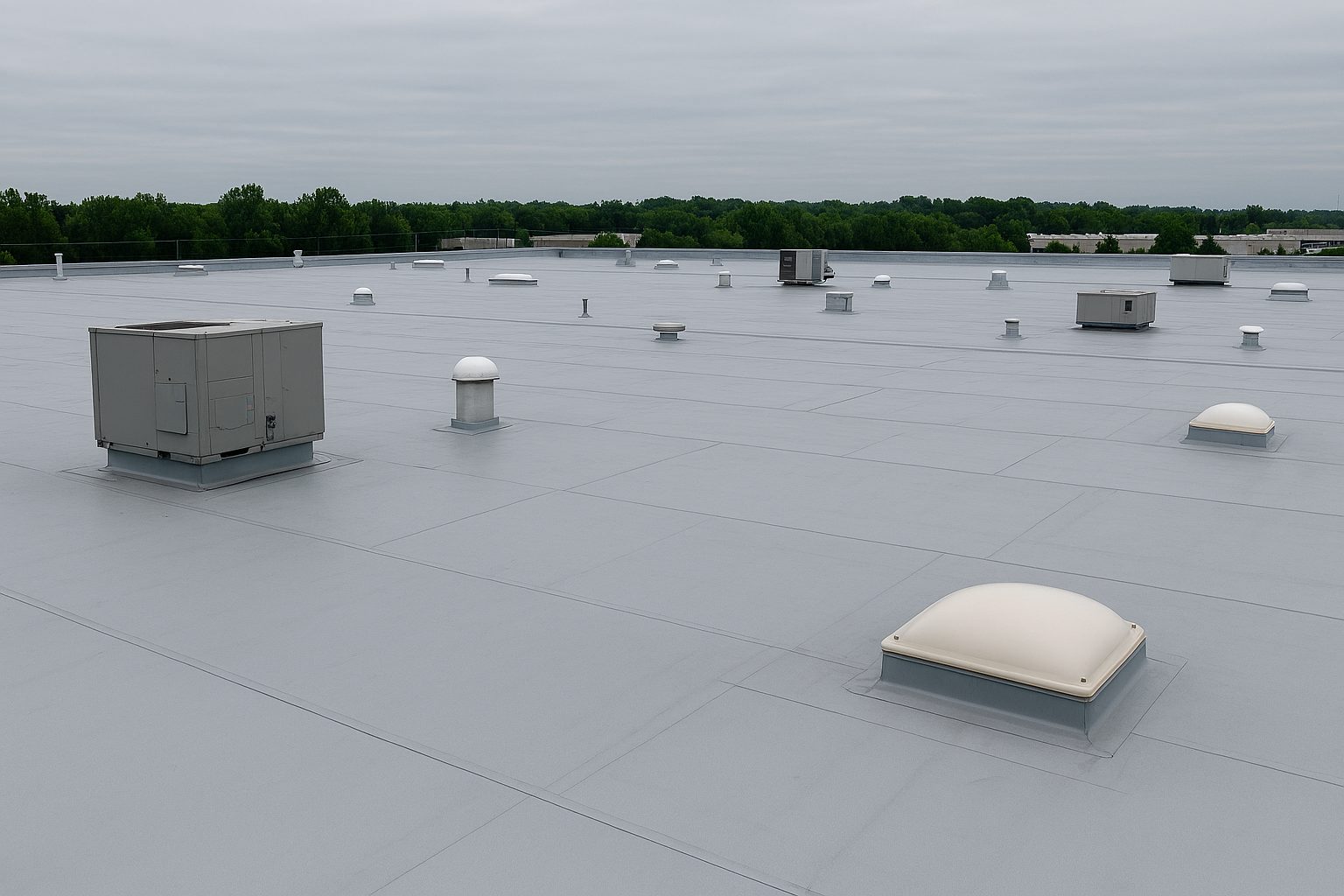
| HVAC & Equipment | Curb flashings, panels, tie-downs | Secure loose access doors, tighten tie-down straps, clear internal debris. |
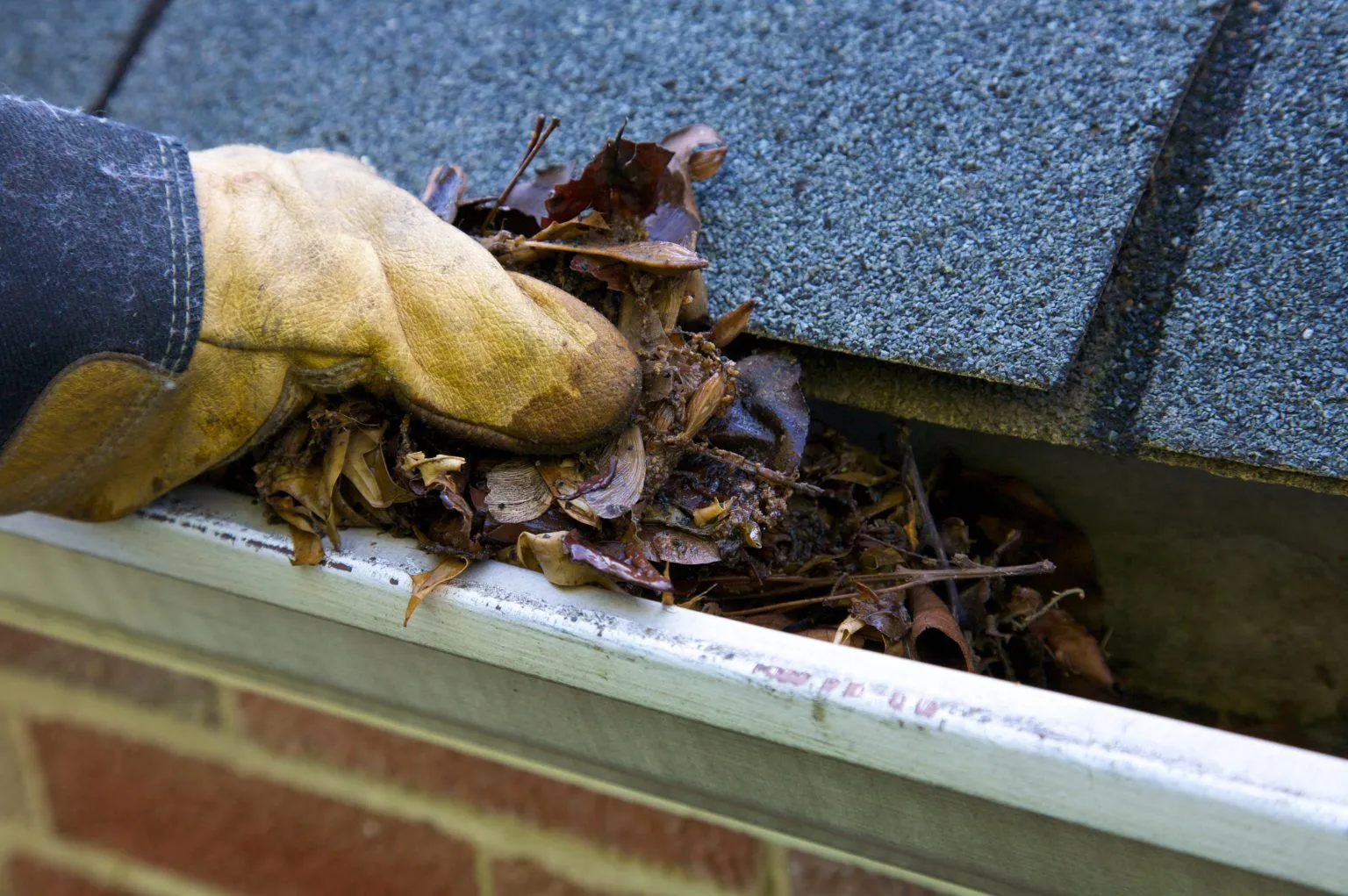
| Drainage Infrastructure | Scuppers, internal drains, gutters | Clear leaves, sediment, and airborne debris clogging flow paths. |
Drainage Optimization: The First Line of Defense
An obstructed drainage system turns your roof into a swimming pool.
- Clear Strainer Domes: Remove leaves, silt, and foreign materials from all roof drain strainers.
- Inspect Scuppers and Downspouts: Verify that wall scuppers are free of bird nests or debris. Check downspouts for blockages.
- Verify Overflow Drains: Ensure secondary/emergency overflow scuppers are clear and sitting at the correct height above the primary drains to handle sudden excessive rainfall.
Rooftop Equipment and Debris Management
Unsecured equipment turns into dangerous airborne projectiles during a severe windstorm.
- Remove Loose Objects: Discard unused pallets, loose tools, metal scraps, and construction materials.
- Anchor HVAC Cover Doors: Ensure all mechanical panels and door latches are screwed down tightly.
- Trim Overhanging Vegetation: Trim back tree limbs within 10 feet of the roof edge to prevent mechanical scuffing or falling branch impacts during high winds.
3. Structural and System Enhancements for Maximum Resilience
If your commercial roof is aging or you operate in high-risk Texas hail zones (e.g., Dallas-Fort Worth, West Texas, Panhandle), upgrading system components will dramatically lower your long-term risk.
High-Density Cover Boards
One of the single best investments for hail protection is installing a high-density cover board beneath the waterproofing membrane.
Without a cover board, hailstones press membrane materials into soft insulation below, causing membrane punctures or tears. A high-density cover board (such as gypsum or high-density polyiso) acts as an armor layer that dissipates impact energy, preventing punctures and extending system lifespan.
Class 4 Impact-Rated Membranes
When specifying TPO or PVC single-ply systems, choose high-thickness (60-mil or 80-mil) membranes that carry a UL 2218 Class 4 Impact Rating. Class 4 rating indicates the system survived laboratory testing involving 2-inch steel balls dropped twice in the same spot from a height of 20 feet without fracturing.
Perimeter and Edge Metal Reinforcement
Over 70% of commercial roof wind uplift failures initiate at the roof perimeter or edge metal.
- ANSI/SPRI ES-1 Compliance: Ensure all edge metal systems are custom-fabricated and tested to ANSI/SPRI ES-1 standards, engineered specifically to handle local Texas wind speeds.
- Continuous Cleats: Upgrade to heavy-gauge continuous cleats on coping caps and gravel stops to lock perimeter metals firmly in place during high-wind events.
Liquid Elastomeric Roof Coatings
For sound roofs seeking extended lifespan and enhanced storm defense, applying a high-performance elastomeric or silicone roof coating adds a seamless, flexible waterproofing barrier.
- Impact Absorption: Coatings add a resilient layer that helps absorb lower-diameter hail impact.
- Monolithic Seam Protection: Eliminates vulnerable lap seams across the roof surface.
- Reflectivity: Lowers surface temperatures up to 50°F, significantly mitigating thermal shock and reducing summer energy costs.
4. Professional Inspections vs. In-House Checks
While internal maintenance staff can clear surface drains and spot visible debris, high-tech non-destructive testing from a licensed commercial roofing contractor is required to spot hidden storm damage.
1.Visual Walkthrough & Envelope Analysis:Standard baseline inspection.
Inspect perimeter edge metals, penetration seals, counter-flashings, wall terminations, and membrane seams for visible stress or separation.
2.Thermal Infrared Moisture Surveys:Advanced moisture detection.
Conducted at dusk after a sunny day. Thermal imaging pinpoints trapped moisture within sub-roof insulation layers that cannot be seen from the surface.
3.Electronic Leak Detection (ELD):Precision seam testing.
Uses low-voltage or high-voltage electrical fields to trace micro-punctures and hairline openings in single-ply membranes with exact precision.
4.Core Sampling & Structural Deck Evaluation:Destructive verification (when needed).
Small core cuts taken in suspicious areas verify insulation composition, deck integrity, and underlying moisture saturation.
Bi-Annual Maintenance Contracts
Partnering with a dedicated commercial roofer for semi-annual (Spring/Fall) scheduled maintenance ensures that warranty conditions are satisfied and minor vulnerabilities are repaired long before storm season hits.
5. Post-Storm Action Plan: Emergency Response & Insurance Claims
When severe weather strikes your property, executing a prompt, methodical post-storm plan protects your physical building and ensures your commercial insurance claim is fully covered.
Immediate Post-Storm Safety Protocols
- Safety First: Never walk on a commercial roof immediately after a storm if structural integrity is in question or standing water creates slip hazards. Beware of fallen power lines or damaged electrical connections near rooftop HVAC units.
- Document Ground-Level Evidence: Take photos of hail size on the ground, dented downspouts, damaged cars in the parking lot, and windblown debris. This establishes undisputed proof of storm severity for insurance adjusters.
Navigating the Commercial Insurance Claim Process
- Document All Damage Promptly: Take comprehensive photos and videos of water entry inside the building and physical damage on the roof.
- Execute Emergency Mitigation: Insurance policies require property owners to take reasonable steps to prevent further damage. Utilize temporary tarping or emergency leak repair services.
- Obtain an Independent Commercial Inspection: Insurance adjusters work for the insurance company. Having Elite Construction Solutions perform a professional, independent engineering inspection ensures all hidden structural and membrane damage is accounted for in the claim scope.
6. Why Texas Commercial Properties Choose Elite Construction Solutions
Protecting commercial property in Texas demands local expertise, superior craftsmanship, and rapid emergency response capability.
Elite Construction Solutions brings decades of specialized commercial roofing experience to businesses across Texas. We understand the specific regional building codes, extreme weather stresses, and insurance requirements unique to Texas commercial properties.
- Class 4 Impact & High-Wind Experts: Custom engineering systems built to handle 120+ MPH winds and severe hail strikes.
- Comprehensive Asset Management: Preventive maintenance contracts that keep your roof under warranty and fully operational year-round.
- Rapid Emergency Response: 24/7 dedicated crews ready to deploy for immediate storm mitigation and temporary leak repairs.
- End-to-End Insurance Advocacy: We work directly with your commercial insurance carrier, providing full documentation, drone mapping, and thermal imaging to ensure your claim is settled fairly.
Don’t Wait for the Next Texas Storm to Test Your Roof
A reactive approach to commercial roof maintenance leaves your business vulnerable to unexpected structural failures, operational downtime, and costly emergency repairs. Protect your asset, your tenants, and your bottom line with a proactive storm prevention strategy.
Take Action Today
Contact Elite Construction Solutions today to schedule your comprehensive Commercial Storm Readiness Inspection. Our expert technicians will evaluate your roof’s current condition, identify hidden vulnerabilities, and provide a tailored plan to safeguard your property against Texas weather.
Popular Posts